Pack Light: Minimalist Digital Travel Packing Planner
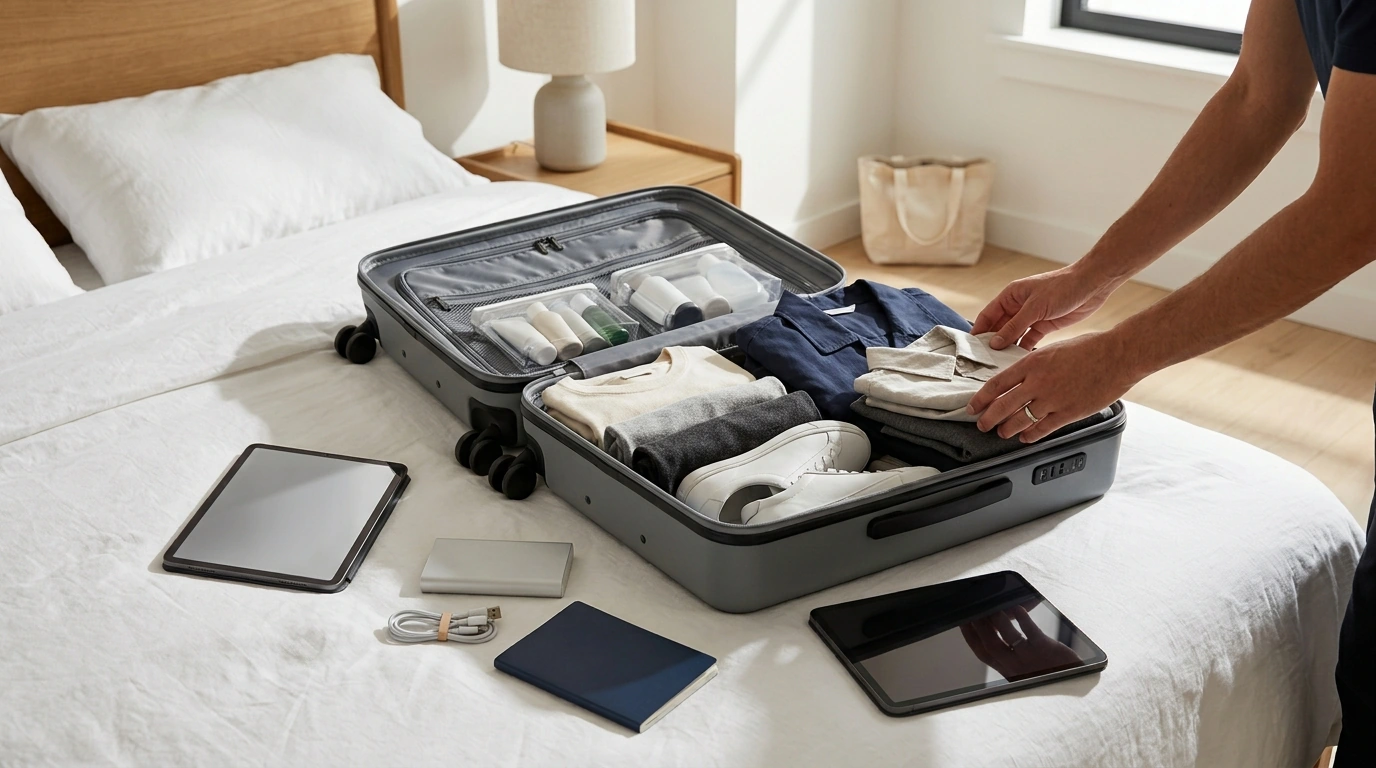
Minimalist Travel Packing Planner: Pack Light, Stay Organized, and Travel Calmly
Packing light gets easier when decisions are made once, saved, and reused. A minimalist digital packing planner turns trip details—weather, activities, laundry access, and baggage limits—into a simple checklist and a repeatable routine that reduces overpacking and last-minute stress. Instead of rebuilding your packing list from scratch every time, you copy a proven template, tweak the variables, and go.
Why minimalist packing feels easier (and why it works)
Minimalist packing isn’t about deprivation; it’s about removing friction. With fewer items, there are fewer decisions on the road—faster mornings, simpler outfit planning, and less time digging through a bag for the one thing you actually need.
Light luggage also improves mobility. Airport transfers get smoother, public transit becomes less of a wrestling match, and you’re less likely to get hit with surprise baggage fees. Just as importantly, a consistent packing framework prevents duplicates: extra shoes, “just-in-case” outfits, repeated toiletries, and those random chargers that multiply in every pocket.
Comfort still fits inside a minimalist approach when you prioritize versatile layers, planned re-wears, and small problem-solvers (meds, a power bank, a stain-removal pen, blister care). The goal is calm, capable travel—not a perfectly tiny bag at all costs.
What the Minimalist Travel Packing Planner helps track
A strong packing plan starts with clarity. The planner keeps the essential trip inputs in one place so your checklist matches reality.
- Trip snapshot: destination, dates, expected temperatures, key activities, and the general formality level.
- Baggage rules: carry-on size/weight limits, personal-item constraints, and airline liquid requirements. (For U.S. flights, review the TSA 3-1-1 liquids rule.)
- Laundry plan: washer/dryer access, sink-wash feasibility, or local laundry services—this single variable often determines how many outfits you actually need.
- Core packing categories: clothing, footwear, toiletries, tech, documents, and trip-specific extras.
- Pre-departure checks: charging devices, downloading offline maps, confirming reservations, and leaving-home essentials.
If you want a ready-to-use system, the Minimalist Travel Packing Planner (digital download) is designed to keep these details reusable across trips—so each future pack gets faster.
A simple workflow for light, smart packing
This workflow is intentionally small: a few steps, repeated every time, with less mental load.
- Define the trip “shape”: number of days, weather range, and your activity mix (walking-heavy city days, meetings, hiking, beach time).
- Choose a color palette + 1–2 main shoes: this prevents outfit sprawl. If shoes require special socks, extra layers, or a second bag, they’re not minimalist.
- Set an outfit formula: think “tops + bottoms + layers,” then plan re-wears around laundry access. If laundry is available, prioritize fewer bottoms and repeat them.
- Add only the problem-solvers: meds, chargers, adaptors, and one compact contingency item per category (not five).
- Do a final bag test: everything packed, bag zipped, and carry comfort checked before travel day.
Build a minimalist capsule that fits most trips
A capsule wardrobe is the engine behind carry-on-only travel. Start with an outfit ratio: for a week with laundry, you typically need fewer bottoms than tops, and you rely on layering to shift warmth and formality.
- Pick travel-friendly fabrics: quick-dry, wrinkle-resistant, and easy to hand-wash.
- Choose layers over bulk: one warm mid-layer plus one outer layer usually beats multiple heavy items.
- Limit single-purpose pieces: if it can’t be worn at least twice in different combinations, it’s a candidate to cut.
- Use one-in, one-out: adding a specialty item (heels, blazer) means removing another item to keep volume steady.
For travelers who like “systems” beyond the suitcase, pairing packing with a home reset can make departures calmer. The Room-by-Room Decluttering Toolkit can help create a consistent landing zone for travel essentials like documents, adapters, and toiletry refills.
Minimalist packing list template (carry-on friendly)
Use counts based on weather, formality, and laundry access—not trip length alone. Treat this list as a starting point and swap items for your real activities. Keep “documents + essentials” in a single, easy-to-grab pouch for transit days. For health-related prep, the CDC travel packing guidance is a helpful reference.
| Category | Essentials | Typical quantity range |
|---|---|---|
| Clothing | Tops (mix of casual + slightly dressy) | 3–6 |
| Clothing | Bottoms (pants/shorts/skirt) | 2–3 |
| Clothing | Base layers/underwear/socks | 4–7 (based on laundry) |
| Clothing | Sleepwear | 1 |
| Layers | Mid-layer (sweater/fleece) | 1 |
| Layers | Outer layer (rain shell or coat) | 1 |
| Footwear | Primary walking shoe | 1 pair |
| Footwear | Secondary shoe (dressy or sandal) | 0–1 pair |
| Toiletries | Liquids (TSA-size) + solids where possible | 1 kit |
| Tech | Phone + charger + power bank | 1 each |
| Documents | ID/passport, cards, insurance info, reservations | 1 set |
| Extras | Medication, mini first-aid, foldable tote, laundry capsule | Small set |
Make toiletries and tech disappear (without forgetting essentials)
Toiletries and tech are where “tiny duplicates” quietly add weight. Simplify them with a set-it-and-forget-it approach.
For everyday organization that supports travel prep—especially if you stock mini toiletries or keep a “trip snack” bin—the Pantry & Bar Stock Checklist can help keep staples from running out right before you leave.
Stress-free departure: the day-before checklist
Using the digital planner for repeatable trips
FAQ
What is a good minimalist packing list?
A good minimalist packing list is a small capsule of mix-and-match clothing, 1–2 pairs of shoes, a compact toiletry kit (solids where possible), a minimal tech pouch, and a single set of documents. Scale the clothing counts based on weather and laundry access, and prioritize versatile pieces you’ll wear multiple times.










Leave a comment